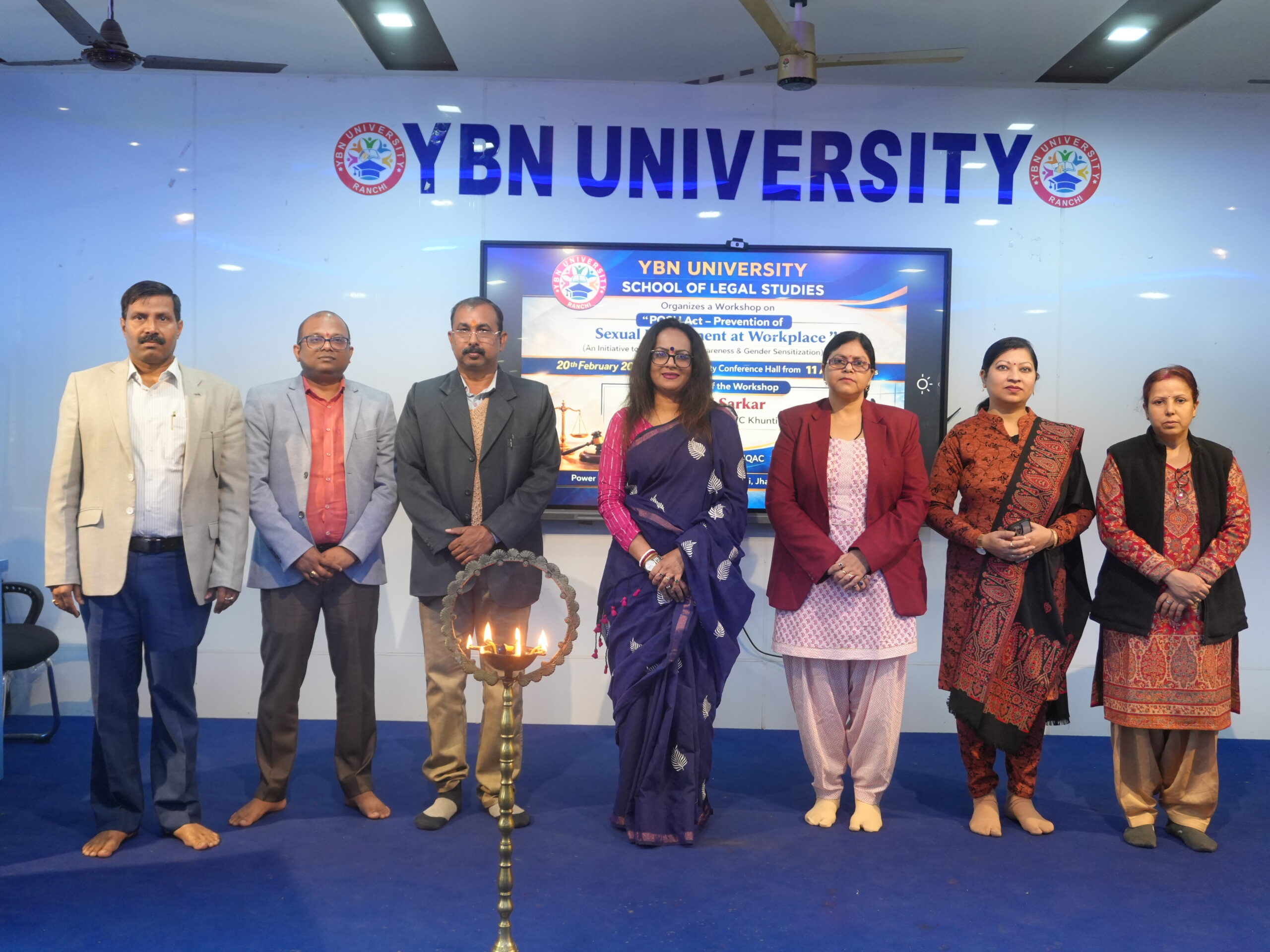
The School of Legal Studies at YBN University successfully organized an insightful workshop on the Prevention of Sexual Harassment Act, aimed at creating awareness and fostering a culture of safety, dignity, and respect in professional environments. The session, led by Tanusri Sarkar, provided participants with a comprehensive understanding of workplace rights and responsibilities.
The workshop focused on key provisions of the POSH Act, helping students understand its legal framework and significance in ensuring a safe workplace. Participants were introduced to essential concepts such as prevention strategies, redressal mechanisms, and the role of institutions in maintaining a harassment-free environment.
A major highlight of the session was the detailed discussion on employee rights and organizational responsibilities. Students gained clarity on how to identify inappropriate behavior, the proper channels for filing complaints, and the role of Internal Committees in addressing grievances. The session emphasized accountability and the importance of timely action.
Thoughtfully designed with multiple engaging segments, the workshop was not only motivational but also highly informative. It served as a dynamic platform to enhance knowledge, share ideas, and encourage open discussions on sensitive yet crucial topics. Interactive sessions allowed participants to ask questions, share perspectives, and build confidence in addressing workplace challenges.
The workshop highlighted how awareness and education are key tools in preventing workplace harassment. By equipping students with practical knowledge, the session empowered them to contribute towards creating respectful and inclusive environments in their future careers.
The initiative also reinforced the importance of holistic well-being, where safety, respect, and mental peace are integral to personal and professional growth. Creating secure workplaces not only protects individuals but also enhances productivity, trust, and overall organizational health.
The workshop concluded with a strong message of collective responsibility. Students left with a deeper understanding of their role in promoting equality, respect, and ethical conduct. Together, such initiatives move us closer to building safer, more inclusive, and empowered workplaces—where every individual feels valued, protected, and heard.